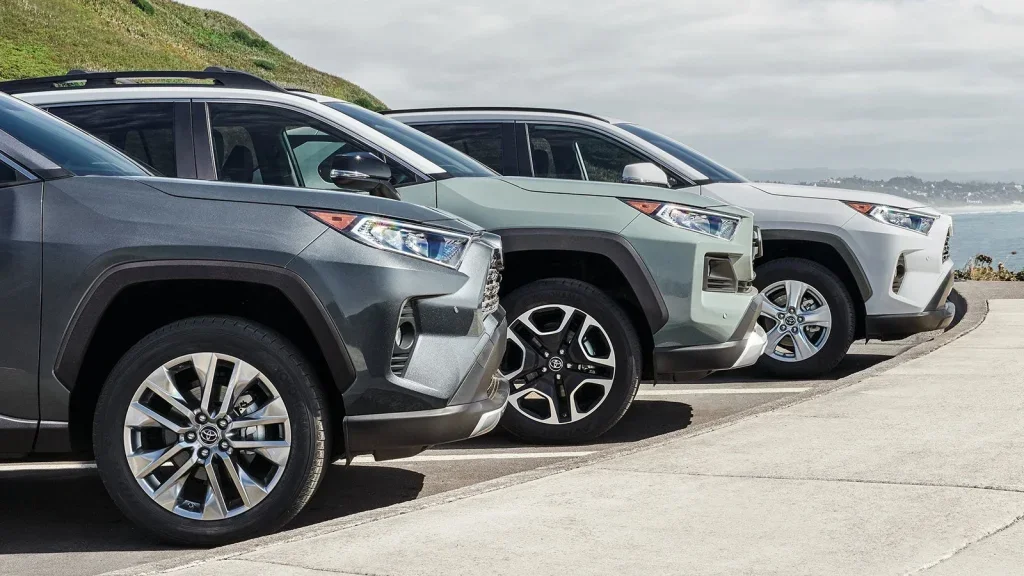

A Central Massachusetts guide to choosing the right drivetrain for winter driving. What AWD Actually Does All-wheel drive can send power to more than one axle, helping a vehicle get moving when pavement is snowy, slushy or slippery. That can be useful in Worcester when you are pulling away from a stop on an untreated side street, climbing a hill, or getting out of a driveway after a storm. What AWD does not do is create extra braking grip. When you need to stop or turn, your tires are the part of the vehicle touching the road. That is why tire condition matters regardless of whether the badge on the back says AWD, 4WD or FWD. Why FWD Still Works for Many Central Massachusetts Drivers Front-wheel-drive vehicles place the engine's weight over the driven wheels and can perform very well in ordinary winter driving when equipped with good tires. For drivers who mostly travel plowed roads around Worcester, Shrewsbury, Auburn, Holden or the interstates, a FWD sedan or crossover may provide everything they need while costing less to buy and operate than some AWD alternatives. If you rarely drive before roads are cleared, do not have a steep driveway and do not regularly travel into hillier or more rural parts of Central Massachusetts, AWD may be a preference rather than a necessity. When AWD or 4WD Is Worth Paying For AWD becomes more compelling when winter traction is a regular part of your life rather than an occasional inconvenience. Consider it more strongly if you commute very early, live on a steep or secondary road, travel frequently into northern New England, need to reach work regardless of weather, or routinely carry family members through winter conditions. Four-wheel drive is often found on trucks and more off-road-oriented SUVs. It can make sense for drivers who need additional capability for job sites, unplowed property, towing or recreational use. For typical Worcester commuting, however, a well-designed AWD crossover is often easier to live with day to day Winter Tires Can Matter More Than the Drivetrain Badge A common mistake is buying AWD and assuming the vehicle is automatically winter-ready. Worn all-season tires can undermine the advantage of the drivetrain. A FWD car on high-quality winter tires may feel more secure in some winter situations than an AWD vehicle on tires that are worn or poorly suited to cold conditions. When evaluating a used vehicle for Massachusetts driving, inspect tread depth and tire condition, ask whether all four tires match, and budget for replacement if needed. On many AWD systems, keeping tire size and wear reasonably consistent across all four corners is particularly important. The Tradeoffs: Cost, Fuel and Maintenance AWD adds components, weight and complexity. Depending on the vehicle, that can mean a higher purchase price, slightly lower fuel economy, additional maintenance considerations and potentially higher repair costs as the vehicle ages. Those tradeoffs are not reasons to avoid AWD - they are simply part of deciding whether you will actually benefit from it. The best value is not automatically the cheapest vehicle or the vehicle with the most features. It is the one that gives you the capability you will use without making you pay every month for capability you do not need. Which Is Better for You? Choose FWD if most of your driving is on maintained roads, you value fuel economy and purchase price, and you are comfortable staying home during the worst storms. Choose AWD if you need to travel in changing winter conditions, have hills or a difficult driveway, or simply want the added confidence of four-wheel traction when accelerating. Consider 4WD if you need a truck or SUV for heavier-duty work, towing, job sites or more demanding unplowed conditions. Whatever you choose, do not neglect tires, brakes and winter driving habits. Drivetrain is only one part of winter safety Shop for the Way You Actually Drive Worcester-area buyers have a huge range of needs. Someone commuting down I-290 every day has a different ideal vehicle than a contractor traveling to job sites or a family heading to ski country every weekend. Start with how you use the vehicle, then compare the best FWD, AWD and 4WD options within your budget. North End Motor Sales carries a changing selection of cars, crossovers, SUVs and trucks, so buyers can compare different drivetrains rather than choosing one in the abstract. NEXT STEP Not sure whether your next vehicle should be FWD, AWD or 4WD? Visit North End Motor Sales at 927 W Boylston St in Worcester and compare the options side by side. Call (508) 853-7665 to ask what is currently available

Buying a Used Car in Massachusetts: Inspections, Warranties and Lemon Law
What Worcester-area buyers should understand before signing for a used vehicle. Massachusetts Gives Used-Car Buyers Specific Protections Buying a used car in Massachusetts is different from buying one in many other states because Massachusetts has specific inspection, warranty and Lemon Law protections. Those rules are worth understanding before you buy, whether the vehicle comes from a licensed dealer or a private seller. This article is a practical overview for Worcester-area shoppers, not legal advice. Rules can change, and individual situations vary, so buyers with a specific dispute should check current guidance from Mass.gov or speak with the appropriate state agency or attorney. The Massachusetts Inspection Requirement Massachusetts requires newly purchased vehicles to be inspected promptly after purchase and registration. The state Vehicle Check program requires newly purchased vehicles to obtain an inspection within seven days of registration. Massachusetts also has a Failed Inspection Law that can provide important remedies in qualifying cases when a recently purchased vehicle fails inspection; the state advises buyers seeking protection under that law to have the vehicle inspected within seven days of the sale date. The practical takeaway is simple: do not put off the inspection. Arrange it immediately after the purchase so that a failed inspection can be addressed quickly and you do not accidentally lose time under a consumer protection rule. What the Used Vehicle Warranty Law Covers Massachusetts' Used Vehicle Warranty Law applies to many used cars, vans and trucks purchased from a dealer for personal or family use. According to current Mass.gov guidance, the statutory warranty generally applies when the vehicle costs at least $700 and has fewer than 125,000 miles on the odometer at the time of sale. The length of the statutory warranty depends on the vehicle's mileage at the time of sale: Fewer than 40,000 miles: 90 days or 3,750 miles, whichever comes first. 40,000 to 79,999 miles: 60 days or 2,500 miles, whichever comes first. 80,000 to 124,999 miles: 30 days or 1,250 miles, whichever comes first. Not every problem or vehicle is covered, and there are exceptions. This is one reason buyers should read the written warranty information and sales documents carefully rather than relying on a verbal summary. What About the Massachusetts Lemon Law? Massachusetts has Lemon Law protections for qualifying used vehicles when serious defects substantially impair use, safety or market value and cannot be corrected as required under the law. The exact process depends on the facts, mileage, warranty period, repair attempts and other details. The important point for an ordinary buyer is to keep records. Save the purchase agreement, warranty, inspection report, repair orders, emails, text messages and notes of conversations. If a problem occurs, written documentation can be critical. Dealer Purchase vs. Private-Party Purchase A private-party sale is not the same as buying from a dealer. Dealer sales can carry protections and obligations that do not apply in exactly the same way to private transactions. Private buyers should be especially careful about the title, bill of sale, previous service records, known defects and independent inspection of the vehicle. A lower private-sale price can be attractive, but it should be weighed against the buyer's responsibility to investigate the vehicle and handle the paperwork correctly. What to Ask Before You Buy a Used Car in Worcester Can I review the vehicle history and available service records? What inspection and reconditioning has the dealership performed? What warranty applies to this specific vehicle? Are there optional service contracts, and what do they actually cover? What is the complete purchase price including fees and add-ons? If I am financing, what are the APR, term, amount financed and total payment obligation? If I have a trade-in, what is the trade value and what happens to any existing loan balance? Why Reconditioning Matters Before the Sale A clean photo and a shiny exterior do not tell you what happened underneath the vehicle. Brakes, tires, warning lights, fluids, suspension components and other wear items can make a large difference in the ownership experience. Ask what the dealership checked and what work was completed before the vehicle was offered for sale. North End Motor Sales describes its Worcester inventory as hand-selected, inspected and fully reconditioned, and the dealership has on-site service capability. For a buyer, that makes it possible to ask specific questions about the vehicle rather than treating every used car as an unknown. The Best Protection Is an Informed Purchase Massachusetts consumer laws are valuable, but nobody wants to buy a vehicle expecting to use them. The better approach is to understand the vehicle, the financing, the warranty and the paperwork before signing. A reputable dealership should be willing to explain the process and give you time to understand what you are buying. For Worcester and Central Massachusetts shoppers, that combination of vehicle condition, clear paperwork and knowledgeable local support is often more important than simply finding the lowest advertised price. NEXT STEP Have questions about a used vehicle, trade-in or financing before you buy? North End Motor Sales has served Worcester-area drivers for more than 40 years. Visit 927 W Boylston St, Worcester, MA 01606 or call Sales at (508) 853-7665